



























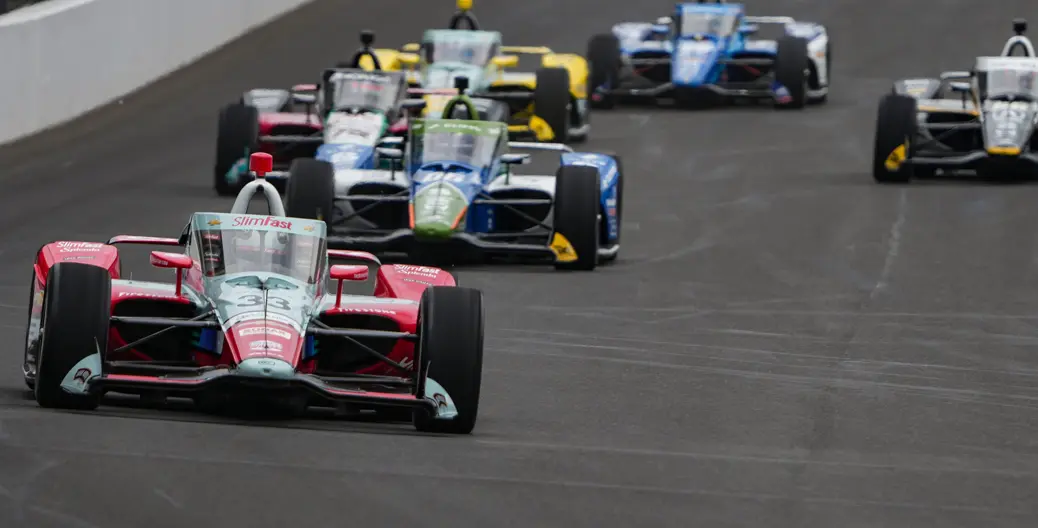
The Indianapolis 500 2026 will be the 110th running of the famed IndyCar Series race that is commonly referred to as ‘The Greatest Spectacle in Racing.’ A three-time winner on the IndyCar circuit already this season, defending champ Alex Palou is the outright Indy 500 betting favorite with Josef Newgarden, Pato O'Ward and David Malukas all having shorter than 10/1 odds.
A sentimental pick would be veteran Helio Castroneves, who looks to become the all-time leader with five Indy 500 victories. In 2021 the Brazilian stunned everyone by edging Palou for his record-tying triumph joining Hall of Famers A.J. Foyt, Al Unser Sr. and Rick Mears as a four-time winner.
He’s no longer a full-time IndyCar racer driving in select races such as the Indy 500. He’s positioned well down the odds board.
Indianapolis 500 2026 Date & Start Time Details
Typically run in late May, the 110th Indianapolis 500 will take place on Sunday, May 24, 2026 at the Indianapolis Motor Speedway. The Indianapolis 500 start time is scheduled for 12:45 p.m. ET. Drivers will navigate 200 laps around the 2.5-mile oval track with the race becoming official at 250 miles or beyond.
Why Start Time Matters for Bettors
The Indy 500 start time is crucial for bettors since it dictates track temperature and the likelihood of weather delays. Those factors can change a car's performance and determine the probability of weather related delays.
Earlier start times allow for better grip on the track leading to faster speeds. However, handling issues can arise from that. When the track heats up the performance of cars can change allowing teams with rides for warmer conditions to have an edge.
There is no night racing at Indianapolis Motor Speedway so any lengthy weather delay can impact the race. The Indy 500 can be declared official if 101 or more laps are completed. If the race resumes following a delay, track conditions can change significantly.
Indianapolis Motor Speedway Track Breakdown
Often referred to as an oval, the Indianapolis 500 track at the Indianapolis Motor Speedway is more rectangular. Nicknamed “The Brickyard” since it was originally paved with bricks, the Indianapolis Motor Speedway has four distinct 90 degree turns connected by two 5/8 of a mile straights called the frontstretch and backstretch and two short straights that are 1/8 of a mile long.
Late in 2025 after track concerns were raised by a number of drivers, The Brickyard had extensive work done around Turn 2 to reduce a rising asphalt issue that caused problems for cars going nearly 200 mph. The problem was caused by shifting and emerging bricks from the original construction of the track.
Track Factors That Influence Race Outcomes
Several factors related to The Brickyard can have an impact on determining the race winner. A relatively flat course with long straights that increase speed, the track dictates a driver’s strategy.
The race track is responsive to changes in temperature. In hotter conditions the asphalt loses mechanical grip causing cars to slide in the corners. Dangerous track conditions lead to driver errors putting better handlers in control. Cooler temperatures provide better grip but passing can be more difficult with the field on more even terms.
How the Indianapolis 500 Race Unfolds
The Indianapolis 500 race is a 200 lap chess match that takes place over roughly three-hours. Drivers won’t win the race in the early stages but they can certainly lose it.
Following the initial chaos at the start of the race, leaders will start overtaking slower cars within the first 100 laps and grip disappears as the track gets slick and greasy. Laps 101-150 is where the chess match gets interesting. Pit strategy and the ‘undercut’ game are more prevalent.
The final sprint covering the last 20 laps is where drivers let it all go. There is no more conserving fuel or cautious turns; it’s basically a sprint to the checkered flag. There always seems to be a game of cat and mouse on the final lap. The top two drivers will bob and weave with the leader trying to prevent a slingshot pass on the final turns.
Key Moments That Shift Betting Value
Live betting the Indy 500 can have plenty of value if viewers are watching closely. Odds shift due to algorithms reacting to a driver's track position and ignoring hidden variables. By identifying moments when a driver’s odds drop but their statistical probability of winning remains high you have found betting value.
An example is a full course caution right before a scheduled pit window opens. Cars can get trapped when pit row closes and a driver's live odds can be severely impacted. However, elite drivers can come back from something like that if enough laps remain.
Indianapolis 500 2026 Betting Odds & Markets
Being the crown jewel of the IndyCar Series and with the race taking place on Memorial Day weekend, the market for Indianapolis 500 betting odds is extensive. Defending Indy 500 champ and reigning three-time IndyCar Series driver’s champion Alex Palou is the outright betting favorite followed closely on the odds board by contenders Josef Newgarden, Pato O'Ward and David Malukas.
With three wins in seven races this season, Palou is getting plenty of attention. However, there are betting options that offer more value and strategies available to pinpoint them. Nine former Indy 500 champions are in the field with Helio Castroneves (4), Takuma Sato (2) and Josef Newgarden (2) having won multiple times.
Beyond picking the outright winner, the Indianapolis 500 betting markets run deep with top placement finishes, driver matchups, winning manufacturer and fastest lap among others.
Odds to win 2026 Indianapolis 500
- Alex Palou +277
- Josef Newgarden +566
- Patricio O'Ward +659
- David Malukas +893
- Conor Daly +1137
- Alexander Rossi +1142
- Scott McLaughlin +1152
- Kyle Kirkwood +1287
- Christian Rasmussen +1413
- Santino Ferrucci +1627
- All other drivers higher than +1800
Smart Betting Angles for the Indy 500
Backing name recognition is a mistake bettors often make. Palou is a big favorite in the outright market and he became more popular after winning the pole. While Palou is a dominant driver, winning the Indy 500 in consecutive years is rare. It’s happened once in the last two-plus decades. It would be wise to lay off his short price and seek value further down the board.
Checking out the starting grid will help to make a more informed wager. In the previous 109 Indy 500 races 67 winners have started in either the first or second row. Starting outside the first three rows puts drivers in a hole since only 33 have ever won the race.
Past Winners, Trends & Betting Patterns
The field for the 2026 Indianapolis 500 is loaded with drivers who have successfully navigated the course to victory. A total of nine former champs, including the past six winners, are behind the wheel. Though he’s no longer a full-time driver in the IndyCar Series, Helio Castroneves has incentive to become the driver with the most career wins at The Brickyard.
- The front row has historically dominated the Indy 500 with the winner coming from the top three spots in around 40 percent of the races.
- Pole position is the winningest spot with 21 victories. That also means the pole-sitter loses around 80 percent of the time making a short-priced favorite a poor standalone wager.
- Making up ground from deep in the starting grid is historically difficult to do. No driver has ever won the Indy 500 from further back than 28th.
- Local favorite Conor Daly has historically drawn heavy action that forces his line past his mathematical probability. Emotional money can disrupt betting lines and spotting those anomalies leads to more informed Indy 500 betting.
What History Reveals for 2026 Bets
With short odds and a history that isn’t kind to repeat winners, Alex Palou is a high-risk gamble in the outright market. However, given the number of winners that come from the front row, value can be found in Alexander Rossi in the second position and David Malukas from the third slot.
Will Power and Josef Newgarden are both brand names and former Indy 500 winners who will get plenty of attention at the betting window. However, they are both buried deep in the field, which isn’t good for their chances of winning. Fade those drivers in the outright market and look closely at a positional prop. Experienced drivers with elite machinery are more than capable of overcoming a number of drivers to produce a top 5 or top 10.
Watching the Indianapolis 500 Live
FOX Sports is the exclusive television broadcaster for the IndyCar season in the U.S. and will air the 2026 Indianapolis 500 live on Sunday, May 24, 2026. Pre race coverage begins at 10 a.m. ET with the green flag dropping at 12:45 p.m. ET. Live streaming is available through FOX One, the FOX Sports all and FoxSports.com.
Viewers outside the US can watch the race via INDYCAR LIVE or through local broadcast partners.
Frequently Asked Questions
Where can I find the official Indianapolis 500 starting grid?
+
The official 2026 Indy 500 starting grid is available on the IndyCar.com schedule page.
How does qualifying affect Indianapolis 500 betting odds?
+
Betting odds are adjusted based on track speed and engine performance during qualifying rounds.
Which drivers typically perform best at Indianapolis Motor Speedway?
+
Helio Castroneves is tied for the most career Indy 500 wins with four. Scott Dixon is the all-time Indy 500 lap leader.
Are there special promotions for betting on the Indianapolis 500?
+
Prime Sportsbook does not offer event specific promotions for the Indy 500 instead providing everyday value with lower than average vig on straight betting lines.
What should beginners know before betting on the Indy 500?
+
Instead of bankrolling one driver to win the race, vary wagers with safer, beginner friendly bets like driver matchups and placement finishes (top 3, 5 or 10).