






























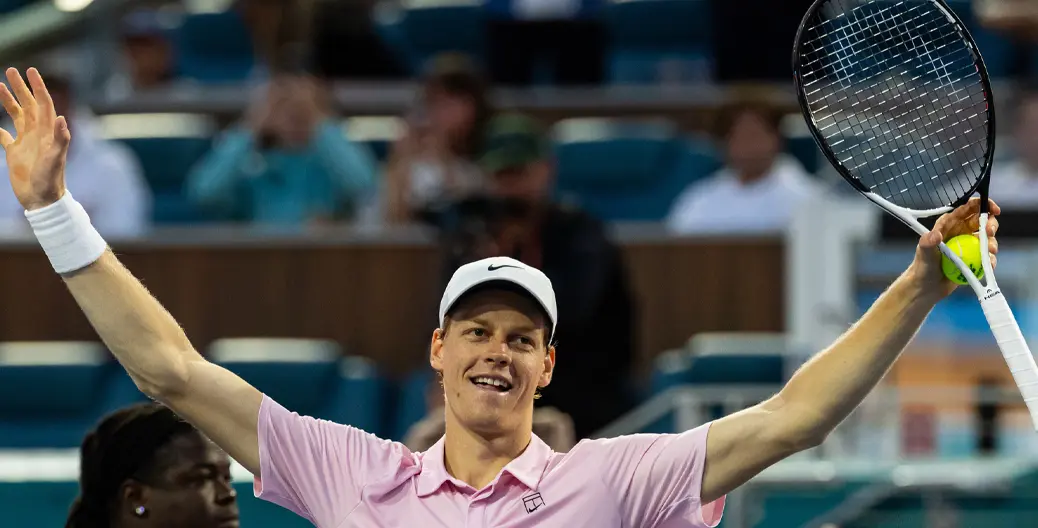
The French Open 2026 returns to Roland Garros with one of the most interesting storylines the tournament has seen in years. Carlos Alcaraz, who won the last two men’s titles in Paris, has withdrawn because of a wrist injury. Jannik Sinner is now the clear betting favorite after a dominant clay-court run that included multiple Masters 1000 victories leading into Paris.
The women’s side looks far less predictable. Aryna Sabalenka, Iga Swiatek, Coco Gauff, Elena Rybakina, and Mirra Andreeva all arrive with realistic title hopes on the clay courts of Roland Garros. Add in the emotional farewell appearances expected from Gaël Monfils and Stan Wawrinka, and the 2026 tournament carries major significance both competitively and historically.
French Open 2026 Dates & Full Schedule
The 2026 French Open takes place from 24 May through 7 June at Roland Garros Stadium in Paris, France. Qualifying rounds begin earlier in the week before the main singles draw officially opens on Sunday, 24 May.
Roland Garros remains the only Grand Slam played on clay, which creates a completely different style of tennis compared to the Australian Open, Wimbledon, or US Open. Longer rallies, higher bounces, and physical endurance all become critical factors over two weeks of competition.
The tournament schedule gradually builds from the early rounds into championship weekend.
| Round | Dates |
| Qualifying | 19 May – 22 May |
| First Round | 24 May – 26 May |
| Second Round | 27 May – 28 May |
| Third Round | 29 May – 30 May |
| Fourth Round | 31 May – 1 June |
| Quarterfinals | 2 June – 3 June |
| Semifinals | 4 June – 5 June |
| Finals Weekend | 6 June – 7 June |
Tournament organizers will also honor several major figures during the event. Caroline Garcia, Stan Wawrinka, and Gaël Monfils are all expected to receive ceremonies recognizing their careers and impact on French tennis.
Finals Weekend & Key Match Timing
The French Open finals are scheduled for the final weekend of the tournament, with the women’s singles final expected on Saturday, 6 June, followed by the men’s singles final on Sunday, 7 June.
Night sessions continue to be a major attraction at Roland Garros, especially on Court Philippe-Chatrier. The atmosphere during evening matches has become one of the signature experiences in tennis. With retractable roofs now available on both Philippe-Chatrier and Suzanne-Lenglen, weather delays are less disruptive than in previous years.
Tournament Format & Clay Court Impact
The Roland Garros French Open tennis tournament uses traditional Grand Slam singles formats. Men compete in best-of-five-set matches, while women play best-of-three. That difference becomes especially important on clay because points and matches tend to last much longer.
Clay courts slow the ball down dramatically compared to hard courts or grass. Players cannot simply overpower opponents with big serves for quick points. Instead, success often comes from patience, movement, spin, and physical conditioning.
Roland Garros also rewards players who can defend well and construct points over long rallies. Heavy topspin becomes a major advantage because the clay surface creates higher bounces that push opponents farther behind the baseline.
That is one reason players like Rafael Nadal dominated Paris for years, and why players such as Iga Swiatek and Carlos Alcaraz have also thrived on the surface. The French Open tennis environment favors players who can combine athleticism with tactical discipline.
Another notable change in 2026 is the tournament’s decision to allow players to use connected performance devices during competition for the first time. That includes wearable tracking devices designed to provide performance data throughout matches.
Playing Styles That Perform Best on Clay
Clay courts typically favor players with strong movement, endurance, and topspin-heavy groundstrokes. Defensive players also gain more opportunities because the slower surface gives them additional time to recover between shots.
Big servers can still succeed, but raw power alone rarely dominates at Roland Garros. Players who rely heavily on flat hitting often struggle because clay neutralizes pace and extends rallies.
This is why specialists such as Casper Ruud, Stefanos Tsitsipas, and Lorenzo Musetti consistently perform better on clay than they sometimes do on faster surfaces. The ability to slide into shots and stay patient during long exchanges becomes essential over two weeks in Paris.
French Open Draw & Bracket Breakdown
The French Open draw changed dramatically once Carlos Alcaraz officially withdrew from the tournament with a wrist injury. His absence removes the defending champion and one of the strongest clay-court players in the world from the bracket.
That immediately points the odds to Jannik Sinner, who now enters as the clear favorite. Sinner has been dominant during the clay season and nearly won Roland Garros last year before losing an unforgettable final to Alcaraz.
Alexander Zverev and Novak Djokovic also become major factors in the upper tier of the draw. Zverev continues searching for his first Grand Slam title despite multiple deep runs in Paris, while Djokovic remains dangerous even late in his career because of his experience and consistency in best-of-five matches.
Several younger players could also break through. Arthur Fils enters with strong recent clay form and home crowd support. Joao Fonseca, Jakub Mensik, Rafael Jodar, and Alexander Blockx are among the younger names drawing increasing attention entering the event.
On the women’s side, Aryna Sabalenka enters as the betting favorite at (+220), followed by Iga Swiatek (+250), Elena Rybakina (+650), and Mirra Andreeva +750). Coco Gauff, Marta Kostuyk, Madison Keys and Amada Anisimova also headline a deep women’s field.
Spotting Value in Early Rounds
Early-round betting opportunities at Roland Garros often come from identifying players whose clay-court records are stronger than their overall rankings suggest.
Stefanos Tsitsipas remains interesting despite inconsistent recent form because of his career success on clay. Casper Ruud continues to carry strong long-term clay numbers and usually performs well across the early rounds in Paris.
Alexander Blockx has also become a popular dark-horse pick after his strong Madrid performance earlier this season. Younger players with strong movement and endurance can become dangerous quickly on slower surfaces.
The draw itself matters heavily. A difficult quarter can completely change tournament outlooks, especially in best-of-five tennis where recovery and stamina become major factors.
French Open 2026 Odds & Betting Markets
The French Open odds shifted heavily once Alcaraz withdrew from the field. Jannik Sinner now sits as the clear men’s favorite at -270 after one of the strongest clay stretches in recent memory.
Current men’s odds include:
- Jannik Sinner (-270).
- Alexander Zverev (+900).
- Novak Djokovic (+1400).
- Lorenzo Musetti (+1900).
- Joao Fonseca (+2200).
- Rafael Jodar (+2200).
- Casper Ruud (+2700).
- Arthur Fils (+3000).
- Ben Shelton (+4000).
- Jakub Mensik (+4000).
- Daniil Medvedev (+4000).
- Francisco Cerundolo (+5000).
- Alex De Minaur (+5000).
- Karen Khachanov (+6500).
- Sebastian Korda (+6500).
- Hubert Hurkacz (+6500).
- Valentin Vacherot (+6500).
- Stefanos Tsitsipas (+7000).
- Taylor Fritz (+7000).
- Alexander Bublik (+7000).
- Tommy Paul (+7000).
- Jiri Lehecka (+7000).
- Felix Auger Aliassime (+8000).
- Tomas Machac (+8000).
- Flavio Cobolli (+8000).
- Andrey Rublev (+8000).
- Dino Prizmic (+8000).
- Alexander Blockx (+8000).
- Everyone else is listed at odds of +10000 or higher.
The women’s board appears more balanced:
- Aryna Sabalenka (+220).
- Iga Swiatek (+250).
- Elena Rybakina (+650).
- Mirra Andreeva (+750).
- Coco Gauff (+850).
- Marta Kostyuk (+2200).
- Madison Keys (+2200).
- Amanda Anisimova (+2200).
- Victoria Mboko (+2500).
- Karolina Muchova (+2700).
- Jessica Pegula (+2700).
- Naomi Osaka (+2700).
- Qinwen Zheng (+2700).
- Elina Svitolina (+2700).
- Jasmine Paolini (+4500).
- Marketa Vondrousova (+5000).
- Barbora Krejcikova (+5000).
- Alexandra Eala (+5000).
- Linda Noskova (+5000).
- Iva Jovic (+6000).
- Emma Navarro (+6500).
- Hailey Baptiste (+6500).
- Sorana Cirstea (+6500).
- Jelena Ostapenko (+7000).
- Diana Shnaider (+7000).
- Lois Boisson (+8000).
- Anastasia Potapova (+8000).
- Everyone else is listed at odds of +10000 or higher.
Several betting markets typically attract the most attention during Roland Garros:
- Tournament winner.
- Quarter winner.
- To reach the final.
- Match spreads and totals.
- Live betting during long matches.
For more tennis betting information take a look at the Prime Sportsbook Tennis Betting Guide.
Smart Betting Angles for Roland Garros
Clay-court specialists often provide value at Roland Garros because casual betting markets sometimes overrate hard-court rankings and recent results from faster surfaces.
Players such as Ruud, Tsitsipas, and Musetti usually become more dangerous during the European clay swing. Meanwhile, players with flatter baseline games can struggle during long physical matches.
Live betting can also become valuable because momentum shifts happen frequently on clay. Breaks of serve are more common than on grass or hard courts, which creates additional opportunities during long matches.
Understanding expected value also matters when evaluating futures markets. More information is available by reading the Expected Value in Sports Betting guide.
Past French Open Champions & Trends
The French Open champions list has historically been dominated by clay-court specialists. Rafael Nadal established the standard with his unmatched run in Paris, while Novak Djokovic also captured multiple titles during the Nadal era.
Carlos Alcaraz won the last two men’s singles titles before withdrawing from the 2026 tournament because of injury. His five-set victory over Jannik Sinner in last year’s final was viewed by many as one of the best French Open finals ever played.
On the women’s side, Coco Gauff enters as the defending champion, though Iga Swiatek still carries one of the strongest clay-court résumés in modern women’s tennis. Swiatek’s success in Paris has made her one of the most feared players on the surface.
Recent Roland Garros trends continue to favor players with:
- Strong clay-court win percentages.
- Elite endurance.
- Topspin-heavy baseline games.
- Previous deep runs in Paris.
Repeat Winners & Clay Court Dominance
Clay rewards consistency more than any other surface in tennis. That is why repeat champions are far more common at Roland Garros than at many other major tournaments.
Nadal defined that pattern for years, while players such as Swiatek and Alcaraz have recently shown similar comfort levels on clay. Long rallies and physically demanding matches often allow the best clay-court players to separate themselves over two weeks.
Among active men’s players, Djokovic still owns one of the best career clay win percentages on tour. Tsitsipas, Zverev, and Ruud also continue to rank among the strongest long-term clay performers despite inconsistent results at other majors.
How to Watch the French Open 2026
Fans looking for how to watch French Open coverage will have several viewing options around the world.
In the United States, Warner Bros. Discovery handles coverage through TNT Sports. TNT will air many of the featured matches, while truTV carries additional daily coverage. Max serves as the primary streaming platform with access to every match from the tournament.
Coverage in the US begins Sunday, 24 May at 5:00 AM ET.
In the United Kingdom and Ireland, TNT Sports and discovery+ carry the tournament. Eurosport handles coverage across much of mainland Europe, while Nine and Stan Sport broadcast the event in Australia. Canadian coverage is available through TSN and RDS.
Frequently Asked Questions
What surface is used at the French Open?
+
The French Open is played on red clay courts made from crushed brick. The slower surface creates higher bounces and longer rallies than hard courts or grass.
How long do French Open matches usually last?
+
Clay-court matches are often longer because the surface slows the ball down and creates more extended rallies. Men’s best-of-five matches can regularly last more than three or four hours.
How does the draw impact betting strategies?
+
The draw can dramatically affect tournament futures because difficult sections force top players into tougher early matchups and longer physical paths through the bracket.
Are there more upsets at the French Open compared to other Grand Slams?
+
Yes, clay courts can create more unpredictable results because specialists often outperform their rankings while power-based players sometimes struggle on slower surfaces.
What are the most common betting markets for French Open matches?
+
Popular betting markets include match winners, game spreads, set totals, tournament futures, quarter winners, and live betting during matches.