


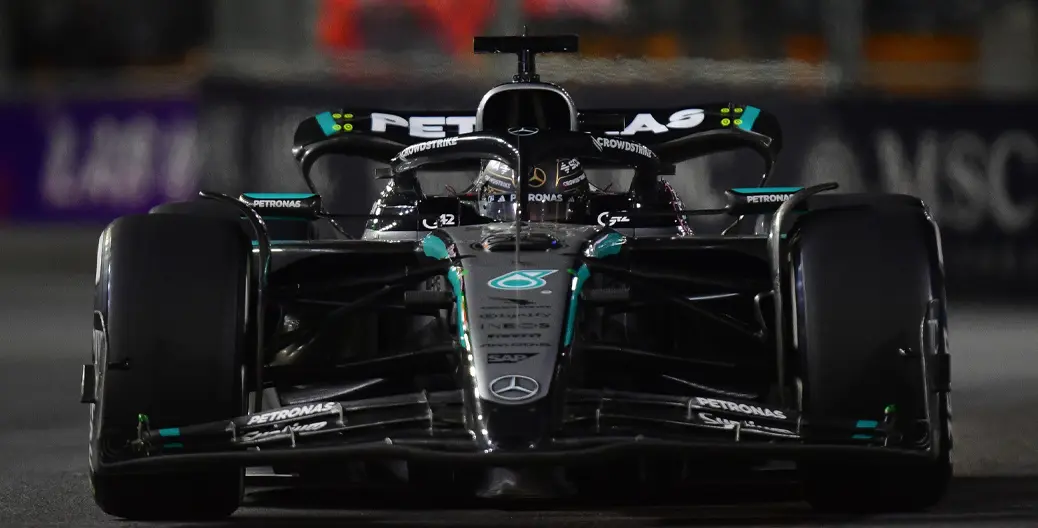
The 2026 Japanese Grand Prix serves as the third round of a transformative Formula 1 season, marked by the debut of a radical new technical era. Scheduled for March 29 at the legendary Suzuka Circuit, the event follows early-season rounds in Australia and China. This year’s race is particularly significant as it represents the first true test of the 2026 car philosophy on a high-speed, traditional road course. The Grand Prix itself starts on Sunday, March 29, at 1:00 AM ET. In the United States, the most significant change is the move to Apple TV, which has become the exclusive home for all sessions.
2026 Japanese Grand Prix Race Breakdown
Mercedes enters the weekend as the clear team to beat, having secured wins in both opening rounds. The battle between George Russell and rookie sensation Kimi Antonelli has captivated the paddock, with Antonelli fresh off his maiden victory in China. Their W17 chassis appears to have mastered the initial complexities of the new hybrid units, providing a level of reliability that has eluded their rivals.
Conversely, traditional powerhouses are grappling with the transition. Red Bull and their new Ford-backed power unit have struggled for pace, leaving Max Verstappen to rely on his impeccable Suzuka record—where he remains undefeated in qualifying and the race since 2022—to stay in the fight.
Meanwhile, McLaren and Aston Martin are facing significant reliability "growing pains," with McLaren failing to start both cars in the previous round and Aston Martin facing a vibration crisis with its returning works partner, Honda.
What Sets the Japanese Grand Prix Apart
The Suzuka Circuit remains a singular anomaly in the world of Formula 1, the only track on the calendar to feature a figure-eight layout. This architectural choice creates a unique balance of tire wear, as the equal distribution of left and right-hand corners prevents the asymmetrical degradation typically seen at other circuits.
Where the Japanese Grand Prix Fits the Season
The Japanese Grand Prix F1 occupies a unique and pivotal position in this year’s championship, serving as the final race of the opening flyaway leg before the sport enters an unexpected month-long hiatus.
Originally part of a longer stretch, the cancellation of the Bahrain and Saudi Arabian Grands Prix due to regional conflicts has shifted the schedule, making Suzuka the third and final round of the season’s first act. After the checkered flag falls on March 29, the paddock will not return to competitive action until the Miami Grand Prix in early May.
2026 Japanese Grand Prix F1 Field and Storylines
The 2026 regulations have introduced the most significant reset in the sport’s history, moving to a nearly 50-50 power split between internal combustion and electric power. The removal of the MGU-H and the tripling of electrical power to 350kW have created a steep learning curve for teams regarding energy management.
At a demanding track like Suzuka, where continuous high-speed corners like the S-Curves and 130R offer limited recovery time, the ability to harvest energy effectively is the primary performance differentiator.
Drivers Suited for Suzuka Circuit
- Max Verstappen enters the weekend with an intimidating record at Suzuka, having remained undefeated in both qualifying and the race since 2022. Even as Red Bull faces a challenging start to the 2026 technical era, Verstappen’s ability to find time in the "S-Curves" remains his greatest asset.
- The championship leaders from Mercedes, George Russell and Andrea Kimi Antonelli, arrive with a significant mechanical advantage and specific driving styles that thrive at Suzuka.
- Despite reliability issues early this season, the Ferrari and McLaren drivers remain high-speed specialists, historically strong at this venue. Charles Leclerc and Lewis Hamilton have kept the Scuderia within striking distance in the constructors' championship, with Hamilton recently securing his first podium.
Team Strategies That Impact Betting
- One of the most significant strategic variables for bettors this weekend is the massive reliability gap across the grid. The first two rounds of 2026 have seen 16 combined DNF/DNS results, a statistic that has inflated the F1 odds for established contenders
- Energy management under the 2026 regulations is expected to be the primary differentiator on Sunday, with Suzuka’s high-speed layout causing "clipping" where cars run out of battery power on the long run toward the 130R corner.
2026 Japanese Grand Prix Betting Odds Overview
- George Russell leads the boards as the -175 favorite, reflecting his consistency and current lead in the Drivers' Championship. His 19-year-old teammate, Kimi Antonelli, is close behind at +275. Ferrari’s pairing of Lewis Hamilton and Charles Leclerc represents the primary challenge to Mercedes' hegemony, both at +1000.
- The most dramatic shift in the 2026 odds is Max Verstappen, whose price has ballooned to +2800. Similarly, the McLaren duo of Lando Norris and Oscar Piastri is listed at +2800. In the mid-pack, Oliver Bearman has emerged as a favorite for prop bettors, with odds of +350 to secure a Top 6 finish.
How F1 Betting Odds Are Shaped
- The F1 betting odds have been fundamentally reshaped by the seismic shift in Formula 1's technical landscape and by Mercedes' dominant form in the opening rounds.
- The most dramatic adjustment in the odds involves the fall of one of the previous era's giants. Max Verstappen, who has historically dominated Suzuka, has seen his odds drift out. This is not a reflection of his driving ability but rather the volatility of the new Red Bull-Ford power unit.
Most Popular Betting Markets for This Race
- The transition to the 2026 technical regulations has created a surge in specialized betting markets that extend far beyond simply picking a race winner.
- One of the most popular new additions is the State of Charge market, which allows fans to wager on which driver will have the highest percentage of battery energy remaining at the start of the final lap
- Closely related to this is the Overtake Mode burst market, where bettors can place wagers on the total number of successful passes made using the new 350kW electrical boost, specifically in the high-speed run from Spoon Curve to 130R.
- Traditional placement markets have also been reshaped by the 2026 grid's increased volatility. The Podium Finish market is currently dominated by Mercedes, with George Russell and Kimi Antonelli
- The Fastest Lap market remains a staple of the Japanese Grand Prix, particularly given that Kimi Antonelli already holds the official lap record at this circuit.
2026 Japanese Grand Prix Betting Tips and Picks
- George Russell is currently the most recommended pick for both the win and pole position, with experts noting that the W17 chassis appears to be the only car that has fully mastered the energy-management complexities of the new regulations………..
- For those looking for more value than Russell’s favorite status provides, rookie Kimi Antonelli remains a popular choice for the fastest lap
- Another reliable strategy under discussion is the Mercedes 1-2 Finish in Any order, which effectively serves as a hedge against intra-team battles between the championship leaders.
- In the podium markets, Lewis Hamilton has become the preferred choice for a third-place finish. Analysts suggest that while Ferrari is not yet fast enough to beat Mercedes on raw pace, Hamilton’s vast experience at Suzuka and his recent podium in China make him a stable bet
- Conversely, experts are advising caution regarding Max Verstappen. While he has won the last four races at Suzuka, the instability of the Red Bull-Ford power unit makes him a "trap" bet for most analysts.
F1 Trends Bettors Should Track
- The dominant storyline is the mechanical reliability of the 2026 power units, which have recorded a staggering 12 combined DNFs and DNSs across the first two races.
- Energy management remains the primary technical differentiator, with teams struggling to balance the new 50-50 split between combustion and electrical power.
- Tire strategy is also trending toward a more conservative approach due to the high lateral loads of the S-Curves. Pirelli has nominated the hardest compounds in their 2026 range—the C1, C2, and C3—to handle the extreme stress placed on the thinner, lighter tires mandated by the new regulations.
Top Bets for the 2026 Japanese Grand Prix
- George Russell leads the Drivers' Championship with 51 points, and his mastery of the W17's qualifying pace makes him the safest pick for both pole position and the race win.
- Kimi Antonelli represents a compelling option for those seeking slightly higher returns. The 19-year-old sensation already holds the lap record at Suzuka and is fresh off his maiden victory in China.
- A standout value play for the weekend is Haas driver Oliver Bearman for a Top 6 finish
- Ferrari remains the most credible threat to Mercedes' dominance, with Lewis Hamilton and Charles Leclerc. However, the more strategic play is backing a Hamilton podium.
Common Pitfalls at the Japanese Grand Prix
- The most significant pitfall for the 2026 season is the phenomenon of super clipping, where a driver depletes their 350kW battery reserve before the end of a long straight. At Suzuka, this is most dangerous on the uphill run toward the 130R corner.
- A counterintuitive pitfall emerged during the first two rounds in Australia and China: pushing too hard in qualifying can actually result in a slower lap time.
- With 12 combined DNFs and DNSs already this season, the biggest strategic pitfall is over-aggressive gambling on tire life.
Frequently Asked Questions
Predicting the 2026 Japanese Grand Prix is significantly more complex than in previous years due to the intersection of the new technical regulations and a high rate of early-season attrition.